Storage-First Kitchen Design for Modern Homes
Kitchen Remodeling in Boston, MA: Storage Design
Quick Take: A storage-first approach helps Boston homeowners reduce clutter and make smarter use of existing square footage. We find that most kitchen remodeling projects in suburbs like Needham and Newton range from $25,000 to $60,000 and typically take 6 to 10 weeks once construction begins. Planning storage early prevents layout regrets and keeps budgets more predictable throughout the renovation process.
Kitchens in Greater Boston homes are working harder than ever. They’re not just for cooking anymore. They’re homework stations, coffee bars, gathering spots, and sometimes even home offices. Yet many were designed decades ago, long before today’s storage demands.
In this guide, we’ll walk through how a storage-first kitchen storage design approach can transform the way your space works. You’ll learn which pantry upgrades make the biggest difference, how pull-out shelves and deep drawers improve daily access, and what hidden storage features are worth considering in modern Boston homes.
If your kitchen feels like it’s constantly playing catch-up, strategic storage planning might be the shift that changes everything.
Why Storage-First Kitchen Design Matters in Boston Homes
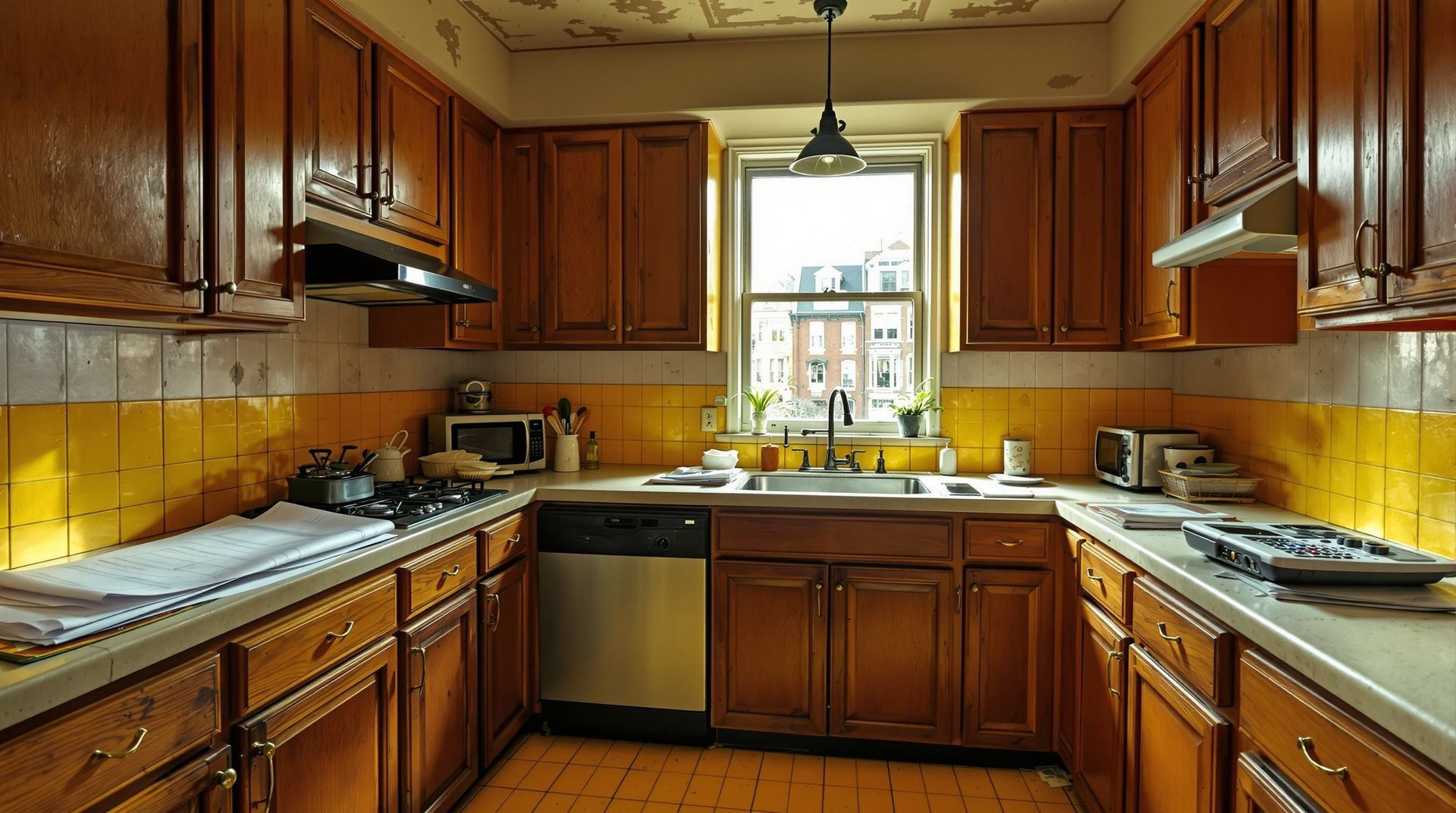
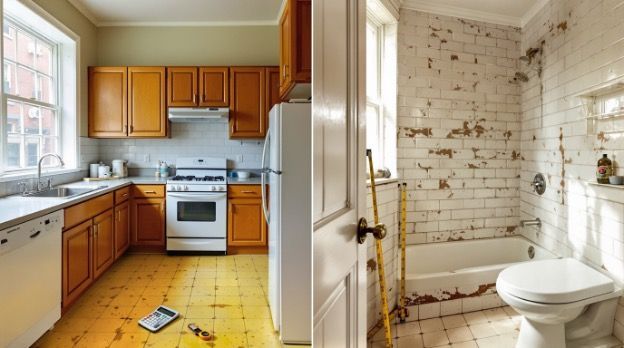
Many kitchens across Greater Boston were built for a different era. Homes in Lexington, Natick, and Westwood often feature layouts designed decades ago when households had fewer small appliances and less cookware. These spaces worked for a simpler routine, but they often fall short of how our team sees families living today.
You usually see the signs of a storage struggle right away. Counters turn into permanent storage spaces instead of work surfaces, and essential items get buried in deep lower cabinets that require crouching to reach. When two people try to cook at the same time, the room starts to feel tight because the layout doesn't account for modern movement.
That is why we recommend thinking about storage before you select colors or finishes. Instead of starting with aesthetics, the planning begins with your daily routine and pain points. Answering questions about coffee stations and cooking habits leads to a kitchen that works better every single day.
1. Pantry Organization: Where Order Begins
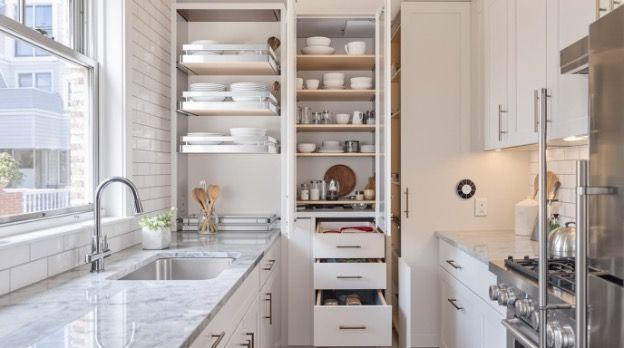
Pantry organization is often the biggest source of daily frustration in older Massachusetts homes. Many properties still rely on shallow pantry closets with fixed shelves where food gets stacked in layers and items expire because they are hidden in the back. This leads to grocery trips turning into expensive guesswork.
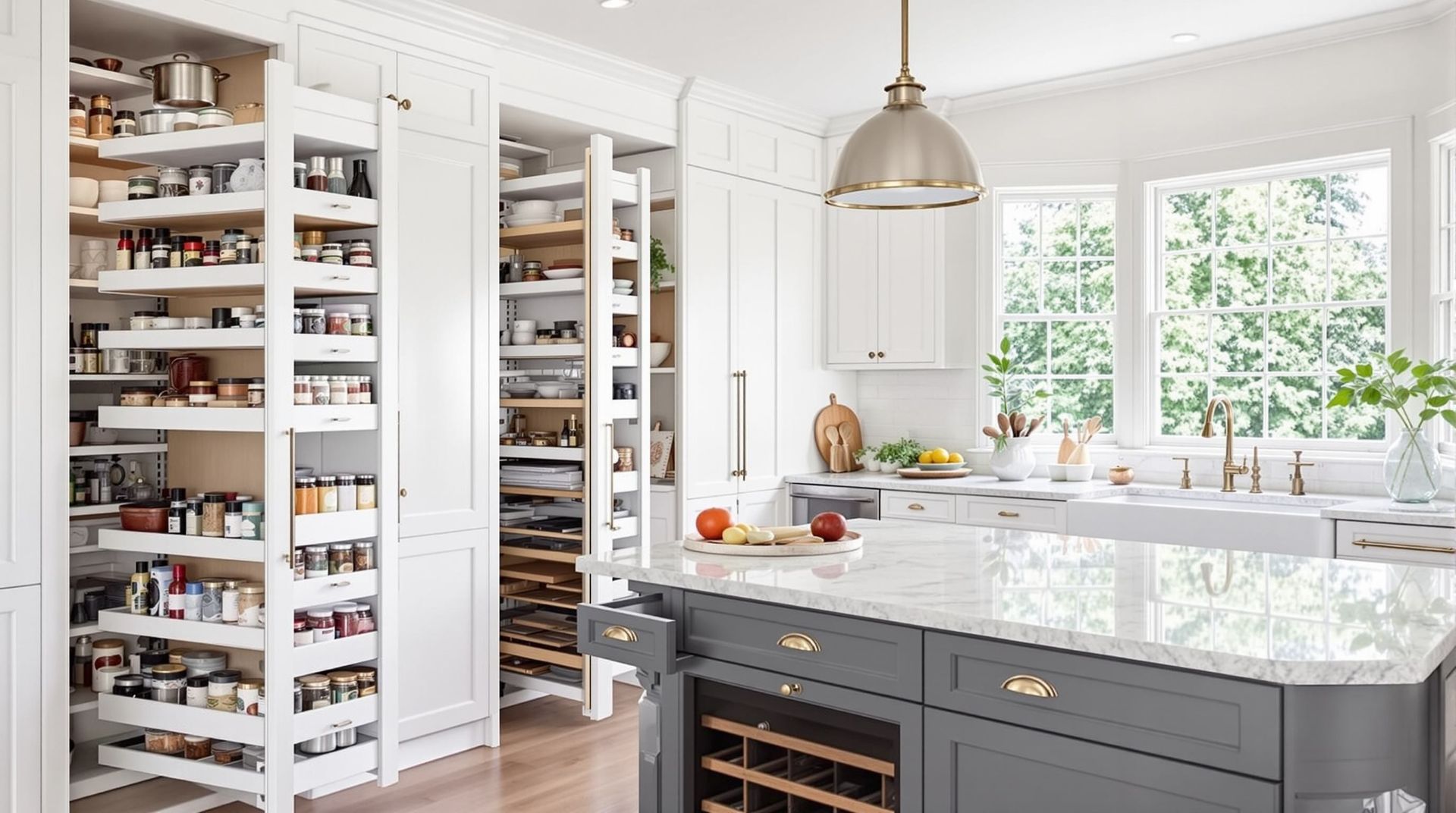
A well-planned pantry solves these issues by maximizing vertical and horizontal space. Effective solutions include:
- Adjustable shelving to accommodate different container heights.
- Full-height pantry cabinets with rollout trays for easy access.
- Deep drawers for bulk storage and heavy items.
- Vertical dividers for baking sheets and serving platters.
Custom kitchen cabinets allow these features to be built in from the start. Shelf depth matters more than most people realize, as 12 to 16 inches keeps items visible. Anything deeper should include pull-out functionality to prevent wasted space and "lost" ingredients at the back of the shelf.
2. Pull-Out Shelves and Deep Drawer Storage
Lower cabinets are typically the least efficient part of an outdated layout. Reaching into a dark back corner often means removing five heavy pots just to grab one frying pan. Pull-out shelves address this directly by gliding forward so everything becomes visible and accessible at once.
Deep drawers offer even more significant improvements for heavy cookware. Instead of stacking pans, you can store them vertically with adjustable dividers. A 24-inch-wide deep drawer often holds more than a standard double-door cabinet and is much easier on your back.
Spacing is equally important during this phase of kitchen remodeling. We generally recommend maintaining 42 to 48 inches between opposing countertops for smooth traffic flow. Drawer heights of 10 to 12 inches work best for large cookware, while narrow 6-inch pull-outs near the range keep oils and spices within reach. These specific measurements prevent the "slammed door" syndrome common in poorly planned spaces.
3. Utilizing Narrow Gaps and Vertical Storage
Small gaps in cabinetry are common in older homes throughout Medfield and Sherborn. Too often, these spaces are covered with filler panels, wasting valuable inches. Slim vertical pull-outs, sometimes just 3 to 6 inches wide, convert these narrow areas into highly practical spice racks or utility storage.
Our team often recommends using these same slim storage solutions during a bathroom remodel to maximize functionality in a more limited footprint.
If your kitchen feels like it’s constantly playing catch-up, strategic storage planning might be the shift that changes everything.
Vertical storage is also ideal for the following items:
- Baking sheets and muffin tins stored on their sides.
- Cutting boards tucked next to the sink or prep area.
- Cooling racks that otherwise take up too much shelf height.
- Slim cleaning supplies like brooms or mops.
These additions create noticeable improvements in daily efficiency. When every inch serves a purpose, clutter decreases naturally, and the room feels more intentional. It is a way to make a small kitchen feel much larger without the high cost of moving structural walls.
4. Hidden Storage for Clean, Open Concepts
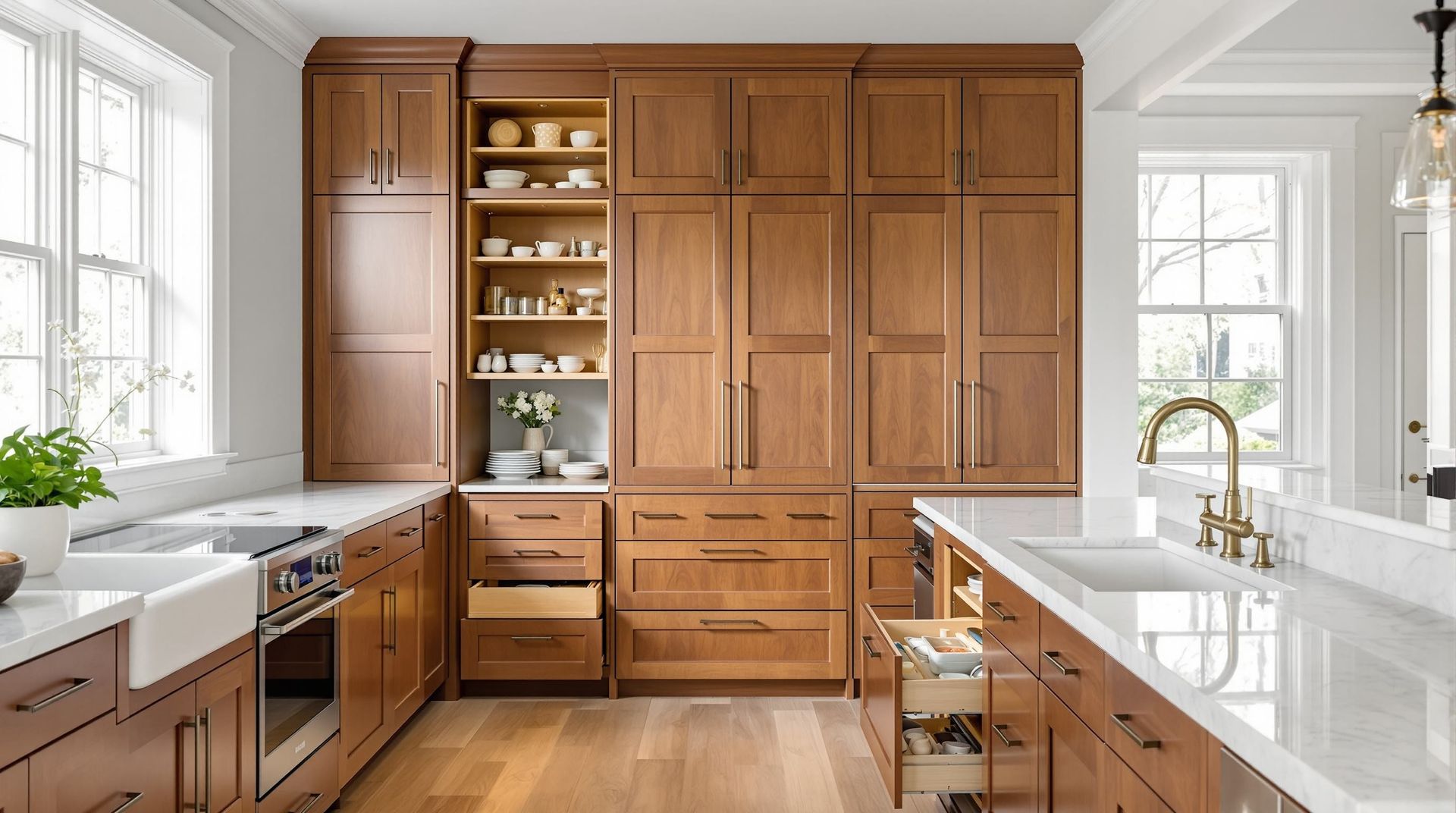
Open-concept homes in Natick and Waltham make organization even more critical. When the kitchen connects directly to living areas, any countertop clutter is visible to guests. Hidden storage solutions keep surfaces clear while preserving the convenience of your most-used tools.
Appliance garages built into cabinetry allow coffee makers and blenders to remain plugged in yet out of sight. Trash and recycling bins can be integrated into lower cabinets to remove visual eyesores. Even microwave drawers can be installed within islands instead of occupying valuable counter space.
The goal is to contain functionality rather than eliminate it. You maintain access to what you need while reducing the visual noise that makes a home feel chaotic. These same organizational principles often extend into a bath remodel, where vertical linen cabinets and pull-out vanity drawers maximize smaller footprints.
Smart Upgrades for Long-Term Value
Beyond the basic layout, several structural changes can make your storage work harder over the next decade. Bringing cabinets all the way to the ceiling is a major win for Boston homes. It provides a dust-free home for seasonal items and serving pieces you only use a few times a year.
Choosing drawers over standard base cabinets is another decision-making factor that pays off. You can see everything at a glance without crouching or digging. In open layouts, your island can also pull double duty by featuring storage on both the working side and the seating side.
Finally, consider dedicated tech zones. Today’s kitchens often double as homework or home office spaces. Adding outlets inside drawers keeps charging cords out of sight and prevents "tech clutter" from taking over your meal prep areas. Planning these features early ensures the kitchen supports your actual lifestyle long after the contractors leave.
Conclusion
A kitchen update should do more than give the space a fresh look. It should make everyday tasks easier and help the room run smoothly for years to come. When storage is planned first, counters stay clear, pantry items are easier to find, and your daily routines feel much less hectic. In many Greater Boston homes, smart storage planning can make a massive impact without the need to change your existing footprint.
If your current kitchen feels cramped or disorganized, a storage-first approach is the right next step. Our team can help you review layout options and visualize storage solutions that fit your lifestyle. Visit our showroom at 14 Charles St, Needham Heights, MA 02494 or call 781-670-3909 to schedule a consultation and move forward with clarity.
Frequently Asked Questions
Pull-out shelves and specialized pantry systems typically add between $2,000 and $8,000 to a budget. While this increases the initial investment, it often prevents the need for future additions or organizational tools.
It depends on your specific floor plan, but many homeowners find that tall pantry cabinets provide similar capacity. These "pantry walls" use less square footage than a walk-in closet while offering better visibility of your goods.
Most kitchen design projects take 6 to 10 weeks from the start of demolition. We recommend setting up a temporary "kitchenette" in another room to handle basic meals while your primary space is under construction.
Yes, many of these organizational strategies work perfectly for bathrooms. Vertical storage towers and pull-out drawers in vanities help manage toiletries and linens in the smaller footprints typical of Boston area bathrooms.