Kitchen Remodeling Trends That Improve Function and Style
Kitchen Remodeling Trends in Boston, MA
Quick Take: Today’s kitchen remodeling trends in Boston focus on smarter layouts, better storage, and durable materials like quartz countertops that stand up to daily life. Most kitchen remodeling projects range from $30,000 to $75,000 and take about 6 to 10 weeks, depending on layout changes and cabinet selection. Careful planning up front helps you avoid budget surprises in older Boston homes.
If you’ve lived in your Boston home for a few years, you already know what isn’t working. Tight walkways, limited storage, outdated kitchen cabinets, and counters that show every spill can make daily life frustrating. Many kitchens here were designed decades ago, long before open layouts and oversized islands became common.
Kitchen remodeling trends today aren’t just about looks. You want a space that feels modern but actually works better at 7 a.m. on a busy weekday and during weekend gatherings with friends. Modern kitchen design now focuses on smarter storage, better flow, and materials that hold up over time, not just what photographs well.
Why Function Is Driving Today’s Kitchen Remodeling Trends
Style still matters, but you’ll care a lot more about how your kitchen works after a few months of living with it. Nice finishes won’t fix a layout that makes you shuffle sideways every time someone opens the dishwasher. Plenty of Boston homes, especially older Colonials and triple-deckers, were built with small kitchens tucked away from the main living areas. That setup just doesn’t match how you probably cook, host, and juggle daily life now.
Better flow makes a bigger difference than most people expect. You’ll want about 42 to 48 inches between counters so two people can move around without bumping into each other, and the sink, stove, and refrigerator usually work best spaced 4 to 9 feet apart. Thoughtful kitchen remodeling starts by correcting layout problems first, then layering in modern kitchen design details that make everything feel cohesive and intentional.
Modern Kitchen Design That Respects Boston Architecture
Your kitchen shouldn’t look like it was dropped in from a different house. Boston homes have personality, whether you’re in a brick brownstone, a classic Colonial, or a condo with original trim. Good modern kitchen design keeps that character intact while making the space feel current and functional.
1. Flat-Panel and Shaker Cabinets for Clean Lines
Flat-panel cabinets give you a streamlined, contemporary look without adding visual clutter. If your home leans more traditional, an updated Shaker style usually feels right at home. Slimmer door profiles and simple hardware keep things fresh without chasing short-term trends.
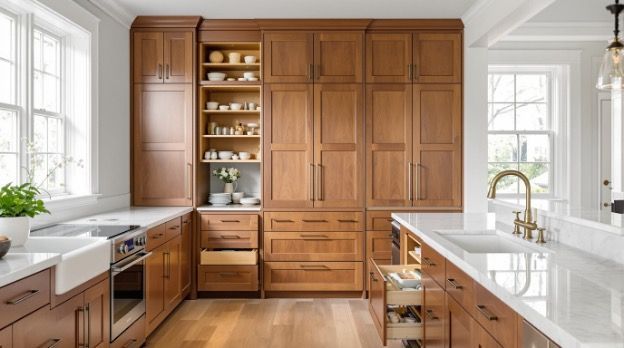
Going all the way to the ceiling with your kitchen cabinets can also make the room feel taller while adding serious storage, especially in homes with 8 to 10-foot ceilings. Proportion matters here. Oversized crown molding or bulky doors can overwhelm a smaller Boston kitchen fast.
2. Warm Neutrals and Natural Wood Accents
Soft creams, light taupes, and natural wood tones create depth without making the room feel dark. A wood island paired with painted perimeter cabinets adds contrast and keeps things interesting. If you already have original hardwood floors, tying in similar tones helps the kitchen feel connected to the rest of your home instead of isolated.
3. Integrated Details That Feel Intentional
Built-in range hoods, hidden appliances, and under-cabinet lighting give your kitchen a finished look without feeling flashy. You don’t need every appliance on display. Clean lines combined with durable surfaces like quartz countertops make the space feel both modern and practical.
Working with a thoughtful kitchen design plan ensures your layout supports how you actually live in the space.
Custom Kitchen Cabinets That Solve Storage Problems
Storage usually becomes the biggest frustration in older Boston kitchens. You might have plenty of cabinets, but somehow nothing fits where it should. Smart kitchen remodeling trends focus less on adding more cabinets and more on making every inch work harder.
1. Deep drawers vs traditional lowers
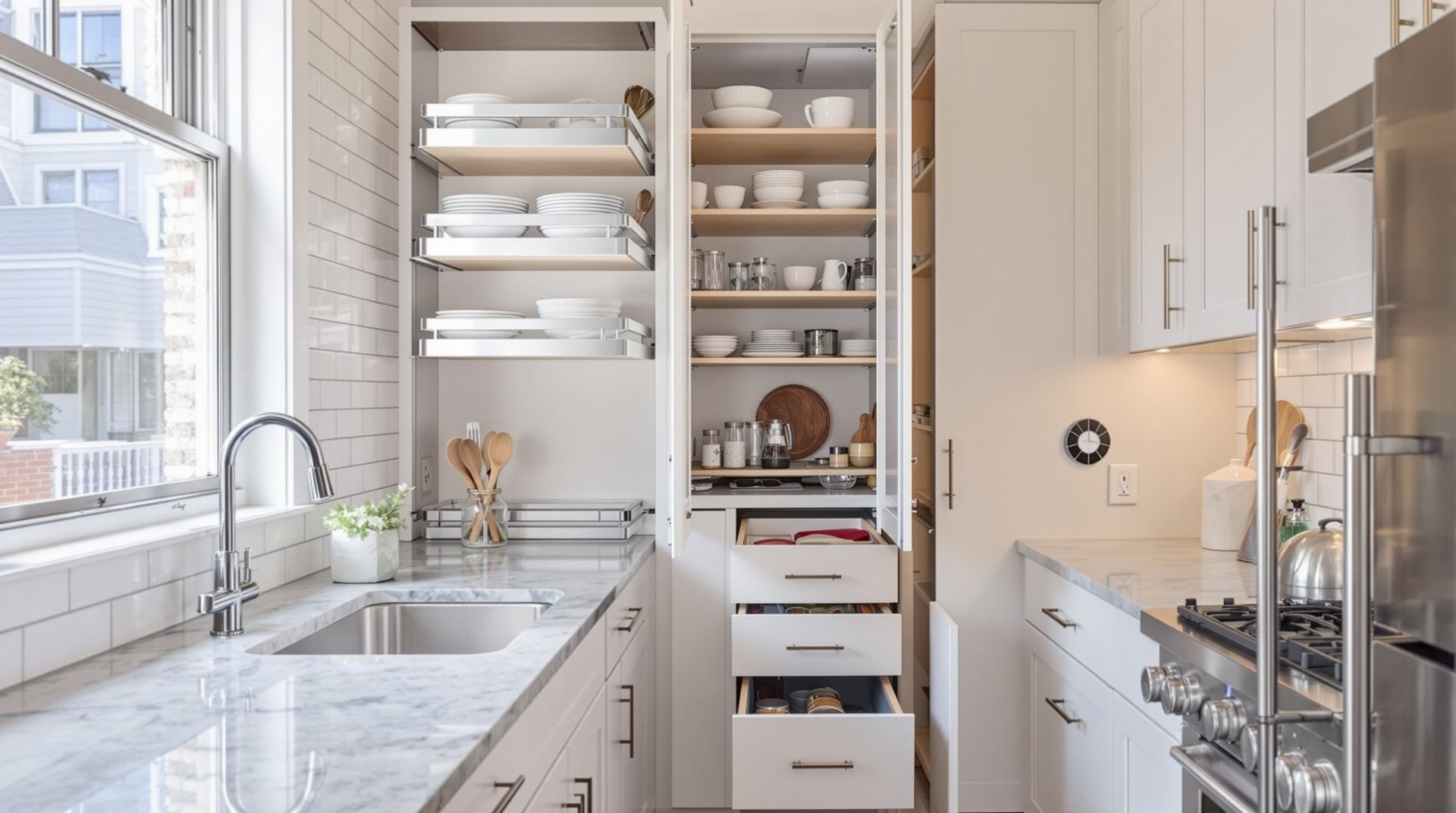
Instead of crouching down and digging through stacked pots and pans, you pull out a full-extension drawer and see everything at once. Heavy cookware, mixing bowls, and even small appliances fit neatly without getting buried in the back.
Soft-close glides also handle weight better and prevent slamming over time. If you cook often, switching from traditional base cabinets with shelves to deep drawers can completely change your daily routine. We often see homeowners surprised by how much more usable space they gain just by making that one adjustment.
2. Pull-out pantry systems
Tall, narrow pull-outs work especially well in Boston kitchens where space is tight. A 9 to 12-inch wide pull-out beside the stove can hold oils, spices, and baking sheets without wasting awkward gaps. Full-height pantry cabinets with rollout trays keep dry goods organized and visible, so you’re not buying duplicates because you forgot what you had.
3. Ceiling-height cabinetry
Going all the way up to the ceiling gives you storage for seasonal items and serving pieces you do not use every day. In homes with 8 to 10-foot ceilings, that extra vertical space adds noticeable capacity.
Thoughtful kitchen cabinets should match how you actually cook and live, not just how the room looks on demo day. Once storage is handled properly, surface materials like countertops start to play a much bigger role in both function and long-term durability.
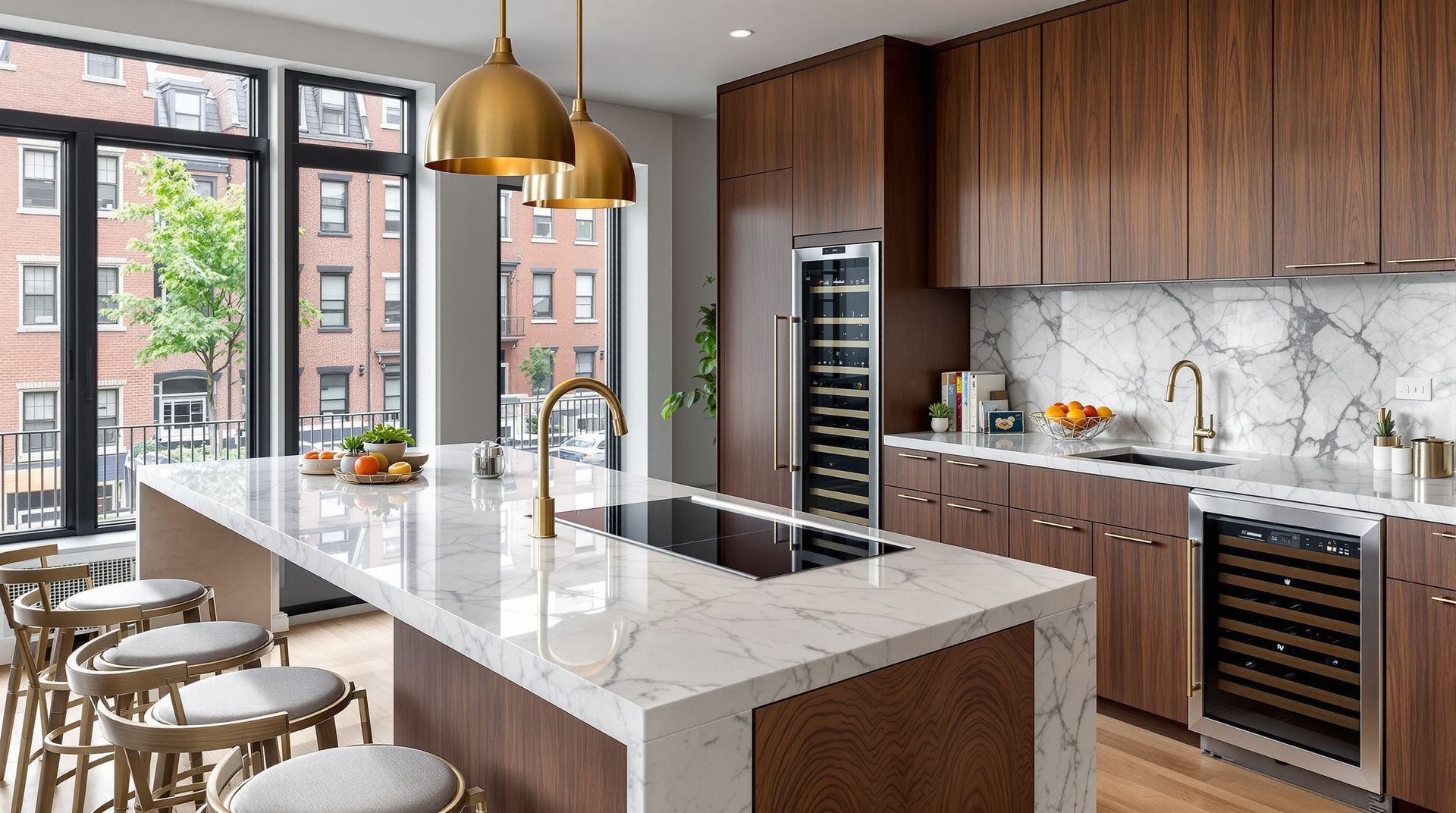
Quartz Countertops and Durable Surfaces
Countertops take more abuse than almost anything else in your kitchen. Hot pans, spilled wine, coffee rings, kids doing homework, and grocery bags sliding across the surface all add up. If you’re investing in a remodel, you probably don’t want to worry about sealing stone every year or stressing over every splash of sauce.
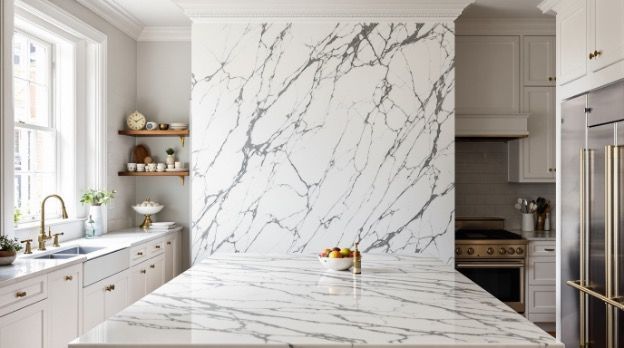
Quartz countertops have become one of the most practical kitchen remodeling trends for that reason. You get the look of natural stone without the maintenance. No sealing required, and the surface resists staining far better than many traditional materials. Busy households in Boston appreciate that durability, especially with seasonal humidity and temperature changes.
Cost typically ranges from about $70 to $120 per square foot installed, depending on the brand and edge profile you select. Waterfall edges on islands remain popular, though they can add $1,000 to $3,000 to your total depending on slab size and fabrication. Proportion is key. In smaller city kitchens, oversized slabs can feel heavy if not balanced carefully.
Once your surfaces are durable and low-maintenance, adding smart appliances and integrated technology becomes the next way to make the space work even harder for you every day.
Smart Appliances That Actually Make Life Easier
Technology in your kitchen should solve problems, not create new ones. You probably don’t need every gadget on the market, but a few smart upgrades can genuinely make daily routines easier.
Many Boston homeowners are choosing features that feel practical rather than flashy, such as:
- WiFi-enabled ovens that let you preheat dinner while you’re still commuting home.
- Touchless faucets that cut down on mess when your hands are covered in flour or raw ingredients.
- Under-cabinet LED lighting with dimmers for better prep visibility and softer evening ambiance.
- Built-in microwave drawers that free up valuable counter space.
- Hidden charging drawers that keep cords and devices off your island.
Electrical Planning
Electrical planning plays a bigger role than most people expect. Older Boston homes may need dedicated circuits or even a panel upgrade to handle modern appliances, which can add $1,500 to $5,000, depending on your current setup. During remodel planning, we make a point to review panel capacity early so upgrades don’t derail the construction timeline later.
Placement matters just as much as the appliance itself. Outlets tucked inside drawers, USB ports near seating areas, and layered lighting at different heights help your kitchen feel intentional instead of cluttered. Once technology is integrated cleanly, open shelving and mixed materials can bring warmth and personality back into the space.
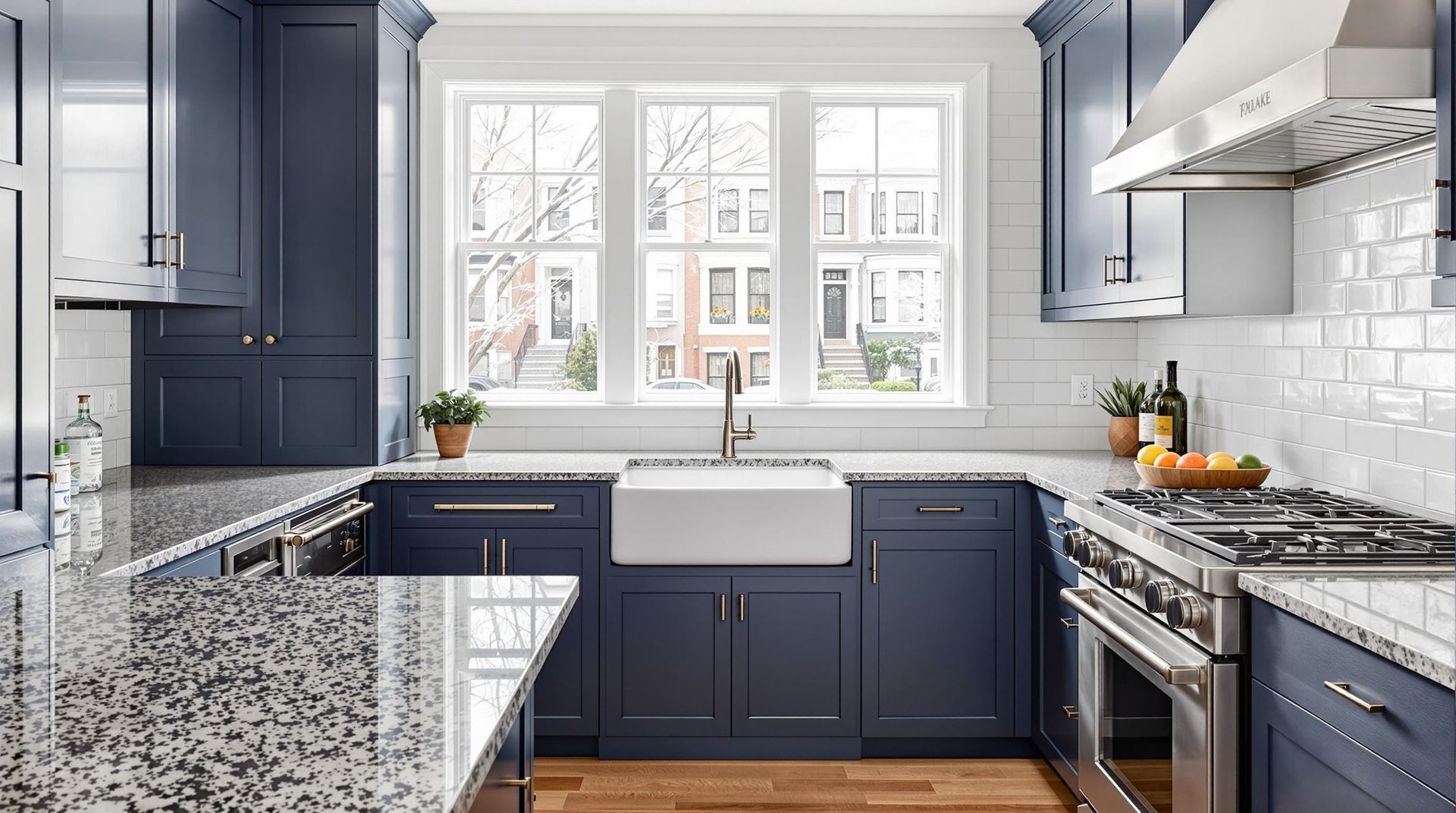
Open Shelving and Mixed Materials Without the Clutter
Open shelving can look great, but it only works if you’re willing to keep it organized. A couple of well-placed shelves can break up a wall of cabinets and make your kitchen feel more open, especially in tighter Boston layouts. Go overboard, though, and suddenly you’re staring at cereal boxes and mismatched mugs every morning.
Most homeowners find that balance works best. Upper open shelves for neatly stacked dishes or glassware, closed lower cabinets for everything you’d rather hide. You still get that airy, modern feel without giving up practical storage. If you cook often or have kids grabbing snacks all day, you’ll appreciate having doors to close.
Mixing materials adds personality without making the room feel busy. Painted perimeter cabinets paired with a stained wood island bring warmth and contrast. A textured backsplash or a continuation of your quartz countertops up the wall creates interest while keeping things cohesive. Layering metal finishes, like matte black with brushed brass, can also give the space depth without feeling chaotic.
Conclusion
Kitchen trends come and go, but the upgrades that make the biggest difference are the ones that improve how your space works every day. You’ll notice the value in better layouts, smarter storage, durable surfaces, and well planned lighting that makes your kitchen easier to use, not just more attractive.
If you’re ready to update your kitchen with ideas that balance function and style, schedule a free consultation. Our team is here to guide you through every decision and help you build a kitchen that works beautifully for years to come.
Frequently Asked Questions
Most kitchen remodeling projects in the Boston area fall between $30,000 and $75,000, depending on layout changes, cabinet quality, and appliance upgrades.
You can expect about 6 to 10 weeks of construction for a standard remodel. Larger projects with structural changes or custom cabinetry may stretch a bit longer.
Quartz tends to be worth it for most busy households. You won’t need to seal it, and it resists staining better than many natural stones. Over time, that low maintenance and durability make daily life a lot easier.
Improved layout, quality kitchen cabinets, durable countertops, and energy-efficient appliances typically offer the strongest return. A kitchen that feels practical, updated, and cohesive usually stands out in a competitive market.